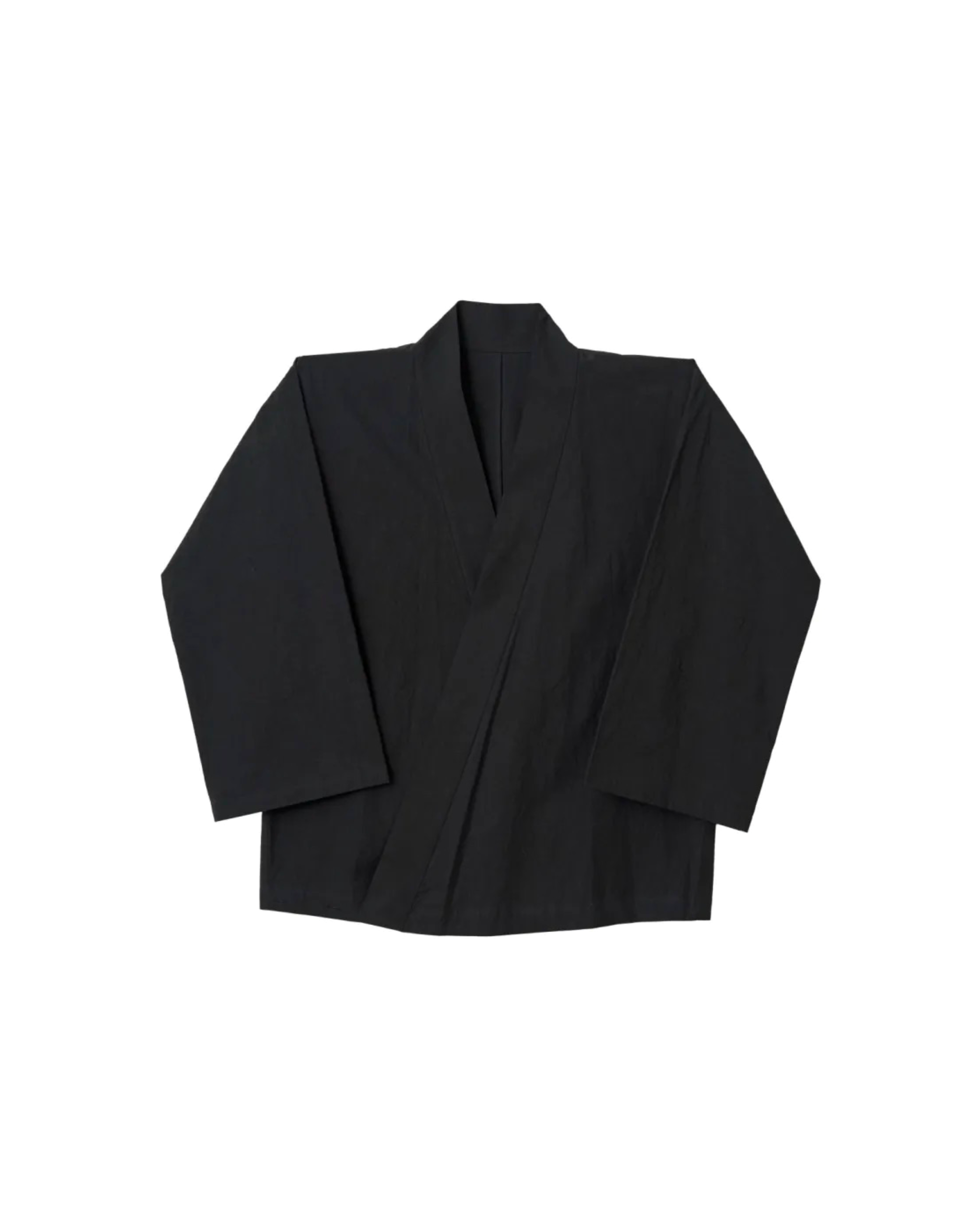
Japanese Traditional Overcoat
Premium Recycled Cotton Fleece | Deep Black / Void | Traditional Japanese Haori-Inspired Design | Open-Front Construction | Wide Kimono-Style Collar | Architectural Draping | Oversized Relaxed Silhouette | Dropped Shoulders | Wide Three-Quarter-Length Sleeves | Central Back Pleat | Asymmetric Front Hem | Soft Structured Fabric | Unisex Design | Contemporary Japanese Minimalism
The Japanese Traditional Overcoat is a contemporary interpretation of traditional Japanese outerwear, combining the elegance of historical garment construction with the freedom and fluidity of modern minimalist fashion.
Crafted from premium recycled cotton fleece, a soft, substantial fabric developed using recovered cotton fibres, the overcoat explores the relationship between comfort, structure, and movement.
Presented in a deep black colourway, the design is distinguished by its open-front silhouette, elongated kimono-inspired collar, broad sleeves, dropped shoulders, and naturally flowing fabric panels.
The garment takes inspiration from traditional Japanese layering pieces, particularly the Haori and Kimono, reinterpreting their generous proportions through contemporary tailoring.
Unlike conventional overcoats that rely on structured lapels, buttons, and fitted construction, the Japanese Traditional Overcoat adopts an unrestricted silhouette. The open front falls naturally along the body, creating vertical lines that emphasise the garment's architectural character.
Its relaxed shoulders transition into wide sleeves, allowing the fabric to move freely without following the natural contours of the arms.
At the back, a subtle central pleat introduces additional volume, allowing the fabric to expand naturally from the upper back towards the hem.
The lower front features a softly asymmetric finish, creating an expressive relationship between fabric length, layering, and movement.
The result is an overcoat that balances the softness of recycled cotton fleece with the understated sophistication of Japanese-inspired design.
Designed for individuals who appreciate unconventional silhouettes, thoughtful material selection, and clothing that communicates luxury through simplicity rather than excessive embellishment.
INSPIRATION — THE TRADITION OF JAPANESE OUTERWEAR
The Japanese Traditional Overcoat draws inspiration from the historical design principles of the Haori, a traditional Japanese jacket worn over a kimono, and the broader philosophy of Japanese layered dressing.
Traditional Japanese clothing often explores garment construction through relatively simple shapes, generous proportions, and the relationship between the body and surrounding fabric.
Rather than closely following the body's natural contours, garments such as the kimono and haori create space around the wearer.
This approach allows fabric to form its own silhouette through gravity, movement, and carefully considered construction.
The Japanese Traditional Overcoat reinterprets these principles for contemporary dressing.
Its broad collar references the continuous neckline construction associated with traditional Japanese garments, while the open front reflects the effortless layering of the haori.
The wide sleeves introduce generous volume, allowing the arms to move naturally within the garment.
The central back pleat contributes additional depth, creating an expanding silhouette that becomes more pronounced during movement.
The garment also reflects the Japanese aesthetic of Ma, a concept associated with the importance of space and the relationship between elements.
In this design, empty space becomes part of the silhouette.
The overcoat does not attempt to define every contour of the body. Instead, the fabric creates a relaxed architectural form around it.
Its dark, uninterrupted surface further reinforces the philosophy of restraint, allowing subtle folds, shadows, and material texture to become the primary design elements.
The Japanese Traditional Overcoat is not a reproduction of historical Japanese clothing. It is a contemporary interpretation of traditional principles — simplicity, movement, proportion, and balance.
FABRIC — PREMIUM RECYCLED COTTON FLEECE
Fabric: Recycled Cotton Fleece
Material Origin: Recovered Cotton Fibres
Colour: Deep Black / Void
Fabric Character: Soft, Substantial, Comfortable, Naturally Draping
Construction: Premium Cotton-Based Fleece
The Japanese Traditional Overcoat is crafted from premium recycled cotton fleece, a fabric developed using recovered cotton fibres.
Recycled cotton is produced by recovering cotton from existing textile materials or production waste and processing it for reuse.
This approach reduces reliance on newly produced cotton fibres and provides an opportunity to incorporate existing textile resources into new garments.
For the Japanese Traditional Overcoat, recycled cotton fleece has been selected for its soft fabric character, comfortable feel, and suitability for generous layering silhouettes.
Unlike rigid outerwear materials that create sharp, fixed shapes, fleece offers a softer relationship between the garment and the body.
The fabric falls naturally from the shoulders, allowing the broad sleeves and open front to develop fluid folds.
Its substantial character provides an additional sense of comfort and coverage without requiring the structured construction of a conventional tailored coat.
Fabric Qualities
1. Recycled Cotton Composition
The fabric incorporates recovered cotton fibres, offering an alternative to materials made entirely from newly produced cotton.
2. Soft Fabric Texture
Cotton fleece is valued for its comfortable surface character, making it particularly suitable for relaxed layering garments.
3. Substantial Material Feel
The fabric provides a sense of body and coverage that complements the oversized construction.
4. Comfortable Layering
The soft fabric and open-front structure allow the garment to be worn comfortably over T-shirts, sleeveless tops, and lightweight inner layers.
5. Natural Fabric Draping
The material forms soft folds around the body, creating a fluid appearance that complements the Japanese-inspired silhouette.
6. Balanced Structure and Flexibility
The fabric supports the overcoat's broad proportions while remaining sufficiently flexible to move naturally with the wearer.
7. Comfortable Warmth
The fleece construction offers a degree of insulation, making the garment suitable for layering in cooler conditions, depending on the specific fabric weight and climate.
8. Cotton-Based Comfort
The recovered cotton fibres contribute the familiar tactile character associated with cotton textiles.
9. Soft Architectural Silhouette
The material allows the garment to retain visible volume without appearing excessively rigid.
10. Responsible Material Approach
Using recovered cotton contributes to textile resource reuse and can reduce demand for virgin cotton, although the overall environmental impact also depends on processing, dyeing, manufacturing, and garment longevity.
11. Subtle Surface Texture
The fabric provides an understated finish that complements the minimalist black colourway.
12. Premium Material Selection
The recycled cotton fleece is chosen to support the design's emphasis on comfort, generous proportions, and fluid movement.
DESIGN & CONSTRUCTION
1. Traditional Japanese Haori-Inspired Silhouette
The Japanese Traditional Overcoat features a broad, relaxed construction inspired by the traditional haori.
Its open front, generous shoulders, and wide sleeves reference historical Japanese outerwear while maintaining a distinctly contemporary appearance.
The silhouette is designed to fall naturally around the body rather than closely following its contours.
2. Open-Front Construction
The garment features a completely open front, allowing it to function as an effortless layering piece.
Unlike conventional overcoats with central button closures, the design relies on uninterrupted front panels.
This creates elongated vertical lines that visually balance the broad proportions of the sleeves and body.
The open construction also allows the inner garment to remain visible.
3. Wide Kimono-Inspired Collar
A broad, continuous collar frames the neckline and extends vertically along the front opening.
The collar introduces structure around the upper body while maintaining a soft, relaxed appearance.
Its width creates a strong visual outline, contributing to the garment's architectural identity.
The collar does not rely on conventional pointed lapels, preserving the Japanese-inspired design language.
4. Oversized Relaxed Silhouette
The overcoat is intentionally designed with generous room through the chest, shoulders, and body.
The oversized proportions create a flowing appearance and allow comfortable layering.
Rather than defining the waist, the design allows the fabric to fall independently around the wearer.
This relaxed construction forms an essential part of the garment's identity.
5. Dropped Shoulder Construction
The shoulder seams sit beyond the natural shoulder point, creating a soft transition between the body and sleeves.
This construction enhances the relaxed appearance and allows the fabric to form gentle folds around the upper arms.
The dropped shoulders also contribute to the broad overall silhouette.
6. Wide Three-Quarter-Length Sleeves
The overcoat features expansive sleeves inspired by traditional Japanese garment construction.
The sleeves fall around the forearm region, depending on the wearer's proportions.
Their generous width creates an architectural appearance while allowing comfortable arm movement.
The broad openings also provide space for layering over long-sleeved garments.
7. Broad Sleeve Openings
The sleeves maintain considerable width towards their lower edges.
Rather than narrowing around the wrist, they retain a relaxed, open construction.
This contributes to the garment's distinctive proportions and reinforces its traditional Japanese influence.
8. Central Back Pleat
One of the most distinctive details of the Japanese Traditional Overcoat is the central pleat positioned beneath the upper back yoke.
The pleat introduces additional fabric volume through the back of the garment.
It allows the overcoat to expand naturally from the shoulder area, creating a soft, flowing silhouette.
The vertical fold also introduces subtle structure and visual depth to an otherwise minimalist surface.
9. Structured Back Yoke
A horizontal seam runs across the upper back, providing a defined transition between the shoulder area and the flowing lower body.
This yoke establishes a controlled upper structure while allowing the central pleat to introduce additional volume below.
The result is a carefully balanced relationship between tailoring and relaxed movement.
10. Asymmetric Front Hem
The lower front of the garment features a gently asymmetric appearance.
The front panels fall naturally to different visual levels as the fabric moves around the body.
This creates an understated irregularity that contributes to the contemporary character of the design.
Rather than relying on a perfectly rigid hemline, the garment embraces a softer, more fluid finish.
11. Softly Curved Lower Silhouette
The hem follows the relaxed movement of the fabric, creating gentle curves towards the sides and back.
This soft finish complements the broad sleeves and open front.
12. Elongated Front Panels
The wide front panels create vertical lines that extend from the neckline towards the hem.
These panels establish a clean visual frame around the inner garment and help balance the overcoat's generous width.
13. Minimalist Exterior Construction
The overcoat deliberately avoids excessive buttons, large graphics, decorative embroidery, and prominent branding.
Its appearance is established through fabric, proportion, seam placement, and draping.
14. Fluid Movement
The recycled cotton fleece allows the garment to move naturally around the body.
The open front and central back pleat contribute to this movement, creating subtle changes in the silhouette as the wearer walks.
15. Unisex Design
The Japanese Traditional Overcoat is developed with a gender-neutral design philosophy.
Its relaxed proportions, open construction, and minimalist aesthetic make it suitable for a wide range of individual styling preferences.
16. Contemporary Layering Functionality
The open-front construction allows the overcoat to be worn over different inner garments.
Its generous fit supports comfortable layering without requiring a closely structured upper body.
COLOUR — VOID / BLACK
The Japanese Traditional Overcoat is available in Void, a deep black shade that emphasises the garment's architectural character.
Black is central to the design's minimalist identity.
Rather than using contrasting colours or decorative prints, the garment relies on variations in light, texture, and fabric movement to create visual depth.
The deep tone highlights the continuous collar, dropped shoulders, wide sleeves, and central back pleat.
The soft surface of the recycled cotton fleece adds understated texture, preventing the monochromatic design from appearing visually flat.
Characteristics of the Void Colourway
-
Deep, understated black appearance.
-
Clean monochromatic aesthetic.
-
Emphasis on fabric texture and structure.
-
Subtle highlights across natural folds.
-
Strong architectural visual identity.
-
Versatile styling with neutral colours.
-
Suitable for coordinated all-black ensembles.
-
Contemporary Japanese-inspired character.
Void allows the garment's silhouette to become the defining feature.
FIT & SILHOUETTE
Fit: Oversized / Relaxed
Silhouette: Flowing / Architectural / Loose
Fabric: Premium Recycled Cotton Fleece
Colour: Void / Black
Collar: Wide Kimono-Inspired Collar
Front: Open Construction
Shoulders: Dropped
Sleeves: Wide / Approximately Three-Quarter Length
Back: Structured Yoke with Central Pleat
Hem: Relaxed / Softly Asymmetric
Styling: Layering Outerwear
Gender: Unisex
The Japanese Traditional Overcoat is intentionally designed with generous proportions.
Its wide shoulders and expansive sleeves create a relaxed upper silhouette, while the open front and flowing body allow the fabric to fall naturally.
The garment is not intended to fit closely around the chest or waist.
Instead, it creates space between the body and fabric, allowing the material to establish its own shape.
For the intended oversized appearance, we recommend selecting your appropriate size according to the size chart.
The precise sleeve length, body length, and degree of draping may vary depending on the wearer's height and selected size.
STYLING THE JAPANESE TRADITIONAL OVERCOAT
The Japanese Traditional Overcoat is designed as a versatile layering piece that can transform an understated outfit through proportion and texture.
Its deep black colour and relaxed construction make it particularly suitable for contemporary minimalist wardrobes.
1. Traditional Japanese-Inspired Styling
Pair the overcoat with Hakama-inspired trousers, wide-leg cotton pants, or relaxed pleated trousers.
Wear a simple black inner top to maintain a cohesive silhouette.
The combination of broad upper and lower proportions creates an expressive look rooted in Japanese-inspired garment design.
Minimal leather footwear completes the ensemble.
2. Monochromatic Styling
Create an entirely black outfit by combining the overcoat with black trousers, a black inner top, and understated footwear.
The monochromatic palette draws attention to differences in fabric texture, layering, and proportion.
The open front and broad sleeves establish depth without requiring contrasting colours.
3. Elevated Minimalist Styling
Style the overcoat over an ivory or white T-shirt with tailored black trousers.
The contrast between the light inner garment and dark outer layer highlights the elongated front opening.
Complete the look with polished leather shoes or minimalist loafers.
4. Contemporary Editorial Styling
Pair the overcoat with architectural trousers, asymmetric draped pants, or exaggerated wide-leg silhouettes.
The combination creates a distinctive editorial appearance based on volume and movement.
A fitted inner layer can be introduced to contrast with the broad proportions.
5. Relaxed Everyday Styling
Wear the overcoat over a plain cotton T-shirt with relaxed trousers or dark denim.
The open construction allows the garment to function as an easy outer layer.
Complete the look with minimalist sneakers or understated casual footwear.
6. Layered Luxury Styling
Combine the overcoat with premium knitwear, a fitted long-sleeved top, or a lightweight shirt.
The broad sleeves and relaxed body provide room for layered textures.
Neutral colours such as black, charcoal, cream, beige, and ivory complement the deep black exterior.
7. Coordinated Japanese Ensemble
Pair the Japanese Traditional Overcoat with Samurai-inspired trousers or other architectural bottoms from the collection.
The relationship between the broad sleeves, open collar, and voluminous lower silhouette creates a cohesive contemporary Japanese-inspired outfit.
For a refined appearance, keep the ensemble monochromatic and allow the different fabric textures to create visual variation.
QUALITY & CRAFTSMANSHIP
The Japanese Traditional Overcoat reflects a design philosophy in which quality is expressed through material selection, thoughtful construction, and careful attention to proportion.
The premium recycled cotton fleece provides the foundation for the garment's flowing silhouette, offering a soft and substantial fabric character.
The wide collar establishes a defined frame around the neckline, while the dropped shoulders and expansive sleeves create a sense of unrestricted movement.
The back yoke and central pleat introduce considered construction details, allowing the fabric to expand naturally while maintaining a balanced overall shape.
The relaxed hem further reinforces the garment's understated architectural character.
Key Product Qualities
-
Premium recycled cotton fleece.
-
Fabric created using recovered cotton fibres.
-
Soft, substantial material character.
-
Comfortable cotton-based textile.
-
Natural fabric draping.
-
Balanced structure and flexibility.
-
Deep black / Void colourway.
-
Traditional Japanese haori-inspired silhouette.
-
Kimono-influenced construction.
-
Open-front design.
-
Wide continuous front collar.
-
Architectural front panels.
-
Oversized relaxed fit.
-
Dropped shoulder construction.
-
Wide three-quarter-length sleeves.
-
Generous sleeve openings.
-
Structured upper back yoke.
-
Central back pleat.
-
Additional fabric volume through the back.
-
Relaxed lower hem.
-
Softly asymmetric front appearance.
-
Minimalist exterior detailing.
-
Unrestricted freedom of movement.
-
Comfortable layering possibilities.
-
Gender-neutral silhouette.
-
Contemporary Japanese-inspired aesthetic.
-
Versatile styling across casual and elevated wardrobes.
-
Design emphasis on proportion, texture, and movement.
-
Incorporation of recycled textile fibres.
Every element contributes to a silhouette that is expressive without excessive decoration.
The garment relies on fabric movement, restrained detailing, and proportion to establish its identity.
WHAT MAKES THE JAPANESE TRADITIONAL OVERCOAT DISTINCTIVE?
The Japanese Traditional Overcoat stands apart from conventional outerwear through its emphasis on soft structure and uninterrupted movement.
Traditional Western overcoats often rely on tailored lapels, structured shoulders, fitted closures, and defined waistlines.
This design takes a different approach.
The broad collar replaces conventional lapels, while the open front allows the fabric to fall naturally.
The dropped shoulders and wide sleeves introduce generous space around the upper body.
The central back pleat provides additional movement and volume, ensuring the silhouette remains expressive from every angle.
The use of recycled cotton fleece further distinguishes the garment, bringing softness and a more relaxed material character to an architectural design.
The deep black colour removes visual distractions, allowing the construction itself to become the primary statement.
Its distinctive quality lies in the balance between historical inspiration, contemporary proportions, and understated material expression.
CARE INSTRUCTIONS
To maintain the fabric quality and preserve the silhouette of the Japanese Traditional Overcoat:
-
Wash gently in cold water with similar colours.
-
Use a mild detergent suitable for cotton-based fabrics.
-
Turn the garment inside out before washing.
-
Avoid bleach and harsh cleaning chemicals.
-
Wash dark garments separately during initial washes.
-
Do not twist or wring the fabric excessively.
-
Dry naturally in the shade.
-
Avoid high-temperature tumble drying.
-
Use a low-temperature iron where permitted by the garment care label.
-
Avoid excessive pressing directly over the central back pleat.
-
Store on a broad hanger to maintain the shoulder and collar shape.
Proper garment care helps preserve the material's texture, colour, and relaxed architectural silhouette.
DISPATCH & DELIVERY
Dispatch Timeline: 7–10 Days
The Japanese Traditional Overcoat is prepared with attention to fabric selection, construction, and finishing.
Please allow approximately 7–10 days for dispatch.
Shipping transit time is additional and depends on the delivery destination and courier service.
Need Faster Delivery?
If you need faster delivery (2–3 days shipping), please contact our customer care team for a special request before placing your order, and we will do our best to assist you.
THE INSANE SHELL — JAPANESE TRADITIONAL OVERCOAT
An exploration of tradition. A study in movement. A contemporary expression of restraint.
The Japanese Traditional Overcoat reinterprets the elegance of historical Japanese outerwear through premium recycled cotton fleece, generous proportions, and architectural simplicity.
Its open-front silhouette, wide sleeves, elongated collar, and central back pleat create a garment that balances fluid movement with considered structure.
Designed for those who appreciate individuality, thoughtful materials, and the expressive potential of minimalism, the overcoat represents an approach to clothing in which every fold and proportion carries purpose.
Where heritage informs the silhouette, fabric defines the movement, and simplicity becomes the ultimate expression of luxury.